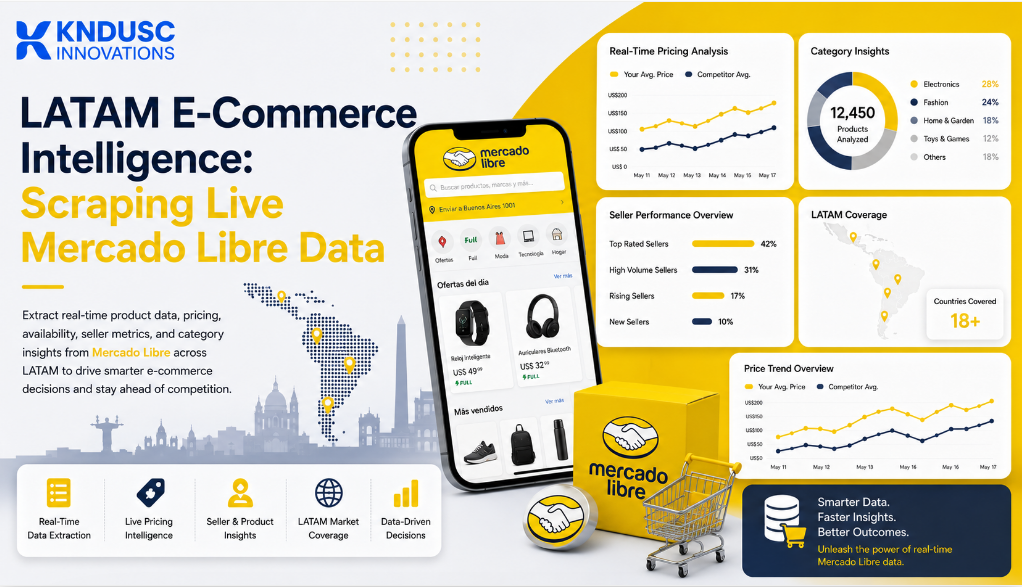
Operating a high-scale retail operation across Brazil (Mercado Livre), Argentina, and Mexico requires an entirely different approach to data velocity than traditional Western marketplaces. Mercado Libre manages the absolute highest transaction density in Latin America. Driven by a fast-moving ecosystem of cross-border brands and domestic third-party merchants, the platform updates its storefront parameters at a frantic pace.
For international retail brands, consumer electronic distributors, and global logistics networks, tracking this footprint manually is an operational impossibility. Product catalogs, buy-box positions, and merchant compliance metrics alter continuously. Crucially, these variations are heavily driven by rapid local currency shifts, regional inflation-driven re-pricing algorithms, and hyper-local delivery incentives.
  Static Script Scraping: Target URL ──> Data Center IP Node ──> Instant CAPTCHA Interception
  Node Ingestion Mesh:    Target Domain ──> Sao Paulo Residential Proxy ──> Session Token Hydration ──> Pristine JSON Data
To deploy reliable dynamic pricing software or monitor localized brand distribution, your corporate analytics engines require a stable, unblocked stream of public marketplace data. Relying on basic web scraping tools or simple script loops will result in immediate system blocks.
Utilizing specialized data scraping and data extraction services allows enterprise teams to smoothly harvest live marketplace inputs without internal engineering friction. This technical brief exposes the structural challenges of executing high-volume Mercado Libre data scraping and demonstrates how to normalize raw variables into reliable corporate intelligence.
1. Technical Audit: Navigating Inflation-Adjusted Caching and Regional Node Blocks
To build a sustainable e-commerce pipeline for Mercado Libre tracking, engineering teams must look beyond basic HTML selectors and focus on handling localized application request variations.
The Inflation-Adjusted Pricing and Currency Cache
In volatile economic environments like Argentina, marketplace sellers adjust prices multiple times a day to account for currency drops. The platform heavily caches its front-end pages across regional content delivery networks (CDNs) to manage server loads. A naive web crawler that only scrapes the visible HTML page code will frequently pull outdated cached data. High-fidelity web crawlers must bypass front-end caches by intercepting and forcing fresh, un-cached backend API responses to capture true, real-time transaction costs.
Asynchronous Client States and JavaScript Interception
Mercado Libre utilizes a responsive frontend infrastructure where product variations (such as color, size, and bundled accessories), live shipping timelines, and explicit merchant identifiers load asynchronously via hidden client-side scripts. Standard scraping tools designed to read raw source code blocks pull empty containers because they cannot execute JavaScript or handle backend API structures safely.
2. Ingestion Matrix: High-Yield Targeted Variables for LATAM Analytics
Building a high-fidelity competitive model requires isolating and capturing specific commercial metadata from individual search result pages and deep product detail pages (PDPs):
| Data Ingestion Layer | Targeted Technical Fields | Operational Value for Businesses |
|---|---|---|
| Catalog Specifications | Product Title, Brand Origin, Multi-Tier Category Mapping, Universal Product Codes (UPC/EAN) | Powers automated catalog alignment and tracks category saturation levels. |
| Dynamic Pricing | Base Listing Price, Installment (Cuotas) Financing Terms, Flash Discount Percentages, Local Currency Code | Feeds automated repricing algorithms to maintain profitable retail margins. |
| Logistics Tracking | Mercado Envíos Full Badge Status, Estimated Delivery Timelines, Local Warehouse Codes | Uncovers supply chain distribution patterns and fulfillment bottlenecks. |
| Merchant Analytics | Seller Store Name, Official Store Badges, Numeric Reputation Color Tier, Seller Location Indicators | Monitors gray-market distribution leaks and tracks competing third-party shops. |
3. Security Analysis: Bypassing Advanced E-Commerce Edge Firewalls
Mercado Libre protects its proprietary pricing sheets, localized supply counts, and merchant catalogs behind multi-layered, AI-driven network protection perimeters. Overcoming these blocks requires deploying an elastic, automated infrastructure.
The Browser Fingerprinting Perimeter
The platform’s edge firewalls inspect incoming request patterns far beyond simple frequency tracking. They perform deep browser inspection, checking for:
- Mismatched HTTP/2 and HTTP/3 TLS cipher handshakes that deviate from genuine consumer browsers.
- Missing or incomplete client metadata, such as failing to provide correct regional language context parameters.
- Rigid, mechanical scraping loops that lack realistic human-like cursor movements or page scrolling intervals.
When an unverified fingerprint signature is identified, the server drops the query instantly, returning strict verification walls or flat HTTP 403 Forbidden responses.
The KNDUSC Solution: Scalable B2B Evasion Engineering
At KNDUSC Innovations, we build custom extraction networks that treat complex application layers as clear, accessible data structures. Our pipelines run fully rendered headless browser automation tools (like Playwright and Puppeteer) configured to introduce human-like browsing speeds and natural delays between actions.
Furthermore, to eliminate geo-fencing challenges and pull authentic localized prices, we route data queries through private residential and mobile carrier (4G/5G) proxy nodes positioned physically inside regional commercial hubs (such as São Paulo, Buenos Aires, and Mexico City).
4. Normalizing Fragmented Regional Datasets
Raw string inputs harvested from cross-border marketplace endpoints are notoriously noisy, frequently combining mixed languages, non-standard unit measurements, and special characters into single blocks.
Universal Category Standardization
Different international suppliers list identical consumer items using completely separate names and category structures across different target countries. KNDUSC’s data cleansing pipelines run these raw data strings through custom text-cleansing chains, transforming messy text fields into uniform database logs for direct database matching.
Contextual Cross-Market Benchmarking
To maintain a decisive retail advantage across global regions, enterprise teams must cross-examine datasets across multiple competing platforms simultaneously. Our scalable data networks allow your business intelligence tools to review these insights side-by-side with your existing industry maps—whether checking broad global consumer marketplace movements using our comprehensive Amazon data scraping and API framework, monitoring entry-level international supply trends via our specialized Temu data scraping guide, checking budget-focused retail inventories through our Aliexpress listings scraping post, or evaluating parallel marketplace frameworks using our ecommerce data scraping complete guide.
5. Fully Managed Data Infrastructure: Eliminating Technical Overhead
Continually building, testing, and updating internal scrapers to manage complex mobile layouts and changing proxy networks is an expensive, ongoing distraction for your core software developers. The moment a marketplace alters its frontend interface or validation headers, home-grown scripts fail instantly, causing critical data blackouts.
We remove this technical overhead entirely by offering a premium, end-to-end Data-as-a-Service (DaaS) model:
- Technical Parameter Scoping: We align with your analytics division to map out your exact needed variables, target geographies, and formatting requirements.
- Risk-Free Schema Prototyping: We build a custom processing pipeline and deliver a tailored sample dataset mapped directly to your company's internal database structure, completely free of charge.
- Production Volume Scale: Once verified, data harvesting scales seamlessly. Pristine data is piped straight into your business workflows via custom api integrations, secure cloud storage options, or direct webhook connections.
6. Summary: Capitalize on Real-Time LATAM Market Intelligence
In the high-speed global e-commerce channels, relying on lagging market indices or slow manual audits leaves your brand at an immediate disadvantage. Implementing automated web data extraction provides a real-time window into competitor price adjustments, localized assortment shifts, and shifting consumption trends.
Stop fighting with proxy errors, browser fingerprint bans, and broken scraping scripts. Partner with the data engineering specialists at KNDUSC Innovations to build a dependable, fully automated data pipeline configured precisely for your company's strategic goals.
Ready to harness deep Latin American market intelligence? Contact our strategy team today through our main solutions portal. Our senior data architects will assess your project scope and deliver a comprehensive data blueprint within one business hour.